Drew Frank · 11 October 2026
Global Climate Assessments Catalyzing Material Innovations for Baltic Harbor Resilience
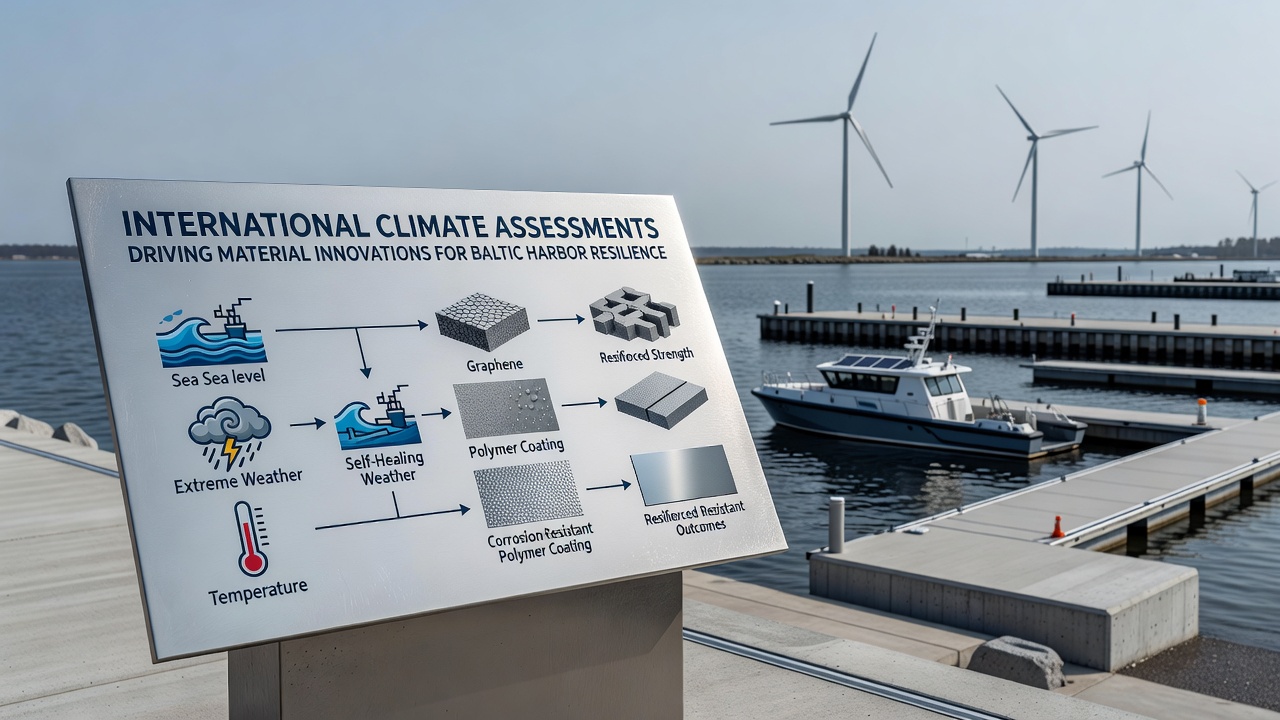
International climate assessments continue to shape how engineers approach harbor infrastructure along the Baltic Sea, where rising sea levels and intensified storm patterns demand new approaches to material selection and design. Reports from bodies such as the Intergovernmental Panel on Climate Change highlight accelerating changes in the region, prompting research teams across multiple countries to test and deploy specialized composites, coatings, and concrete formulations that withstand prolonged exposure to saline water and freeze-thaw cycles.
Key Findings from Recent Assessments
Data compiled in successive IPCC updates and supplementary regional analyses show that the Baltic Sea has experienced measurable increases in water temperature and altered precipitation regimes over recent decades, factors that accelerate corrosion and structural fatigue in traditional dock materials. These findings have directed funding and collaborative projects toward materials capable of self-repair or enhanced resistance, with studies focusing on regions including Poland, Sweden, and Finland where major ports handle significant cargo volumes.
One notable outcome involves the integration of fiber-reinforced polymers that maintain integrity under dynamic loading conditions common during autumn gales, while another line of inquiry examines nano-particle additives in cement mixtures that reduce permeability and extend service life. Observers note that such innovations align directly with projections outlined in assessment documents, which forecast continued environmental pressures through the coming decades.
Material Developments in Practice
Engineers at institutions monitoring Baltic conditions have documented successful trials of corrosion-inhibiting steel alloys treated with advanced galvanic layers, materials now under consideration for upgrades at several commercial terminals. These alloys demonstrate reduced degradation rates when compared against conventional options, according to laboratory simulations that replicate decades of exposure in accelerated testing chambers. Parallel efforts explore bio-based sealants derived from regional forestry byproducts, which offer flexible barriers against moisture intrusion without relying on petroleum derivatives.
Research teams have also examined hybrid structures combining timber elements with protective synthetic wraps, an approach that leverages local renewable resources while meeting updated durability standards derived from climate modeling. Figures released by European monitoring networks indicate that ports adopting these combinations report lower maintenance intervals, supporting operational continuity during extended storm seasons.
Regional Implementation and Data Trends
Ports in the southern Baltic have begun incorporating sensor-embedded materials that provide real-time feedback on structural stress, allowing operators to schedule interventions before visible damage occurs. This practice draws from assessment recommendations emphasizing proactive adaptation strategies, with data logs from pilot installations showing early detection of micro-cracks that would otherwise propagate under repeated wave action. International partnerships have facilitated knowledge exchange, enabling teams in Germany and Lithuania to adapt findings from Canadian Arctic harbor studies where similar cold-climate challenges exist.
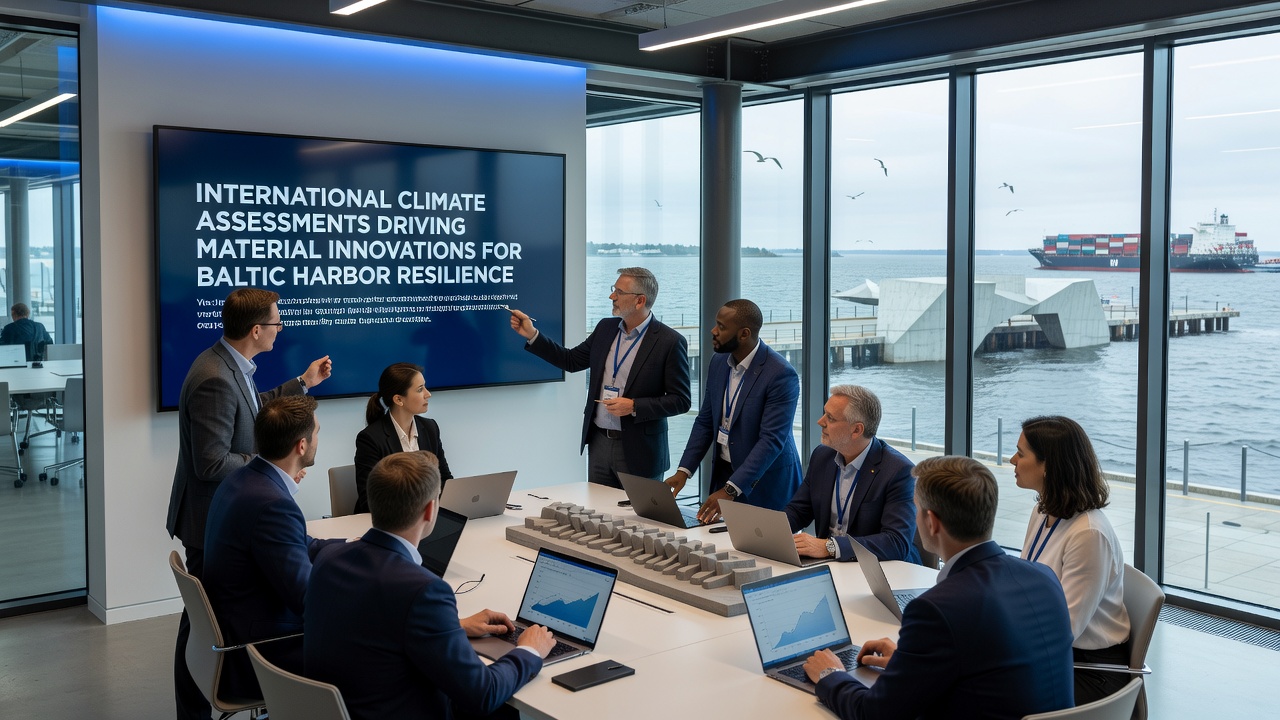
October 2026 is expected to bring updated modeling outputs from ongoing assessment cycles, which researchers anticipate will refine projections for extreme event frequency in the Baltic basin. These updates will likely influence material certification protocols and guide procurement decisions for upcoming infrastructure tenders across the region.
Broader Context and Collaborative Efforts
Academic networks spanning the EU and North America have contributed peer-reviewed studies on how climate-driven variables affect material performance, with one analysis from a Finnish university consortium demonstrating that certain epoxy-modified concretes retain compressive strength after 500 simulated freeze-thaw cycles. Such evidence supports wider adoption of these formulations in areas identified as high-risk in assessment maps. Government agencies in multiple Baltic states coordinate testing facilities that replicate local hydrodynamic conditions, ensuring that innovations translate effectively from laboratory to field application.
Trade organizations representing port authorities have compiled inventories of approved materials that meet both environmental and resilience criteria, streamlining selection processes for project planners. These inventories reference specifications developed in response to assessment findings, including thresholds for chloride penetration and ultraviolet degradation.
Conclusion
International climate assessments supply the foundational data that steers material science toward solutions tailored for Baltic harbor environments, where changing conditions require sustained attention to durability and adaptability. Ongoing trials and data collection efforts indicate steady progress in developing options that address corrosion, thermal stress, and mechanical wear. As new assessment outputs emerge, including those anticipated around October 2026, the pipeline of tested innovations is positioned to support infrastructure that maintains functionality under evolving environmental loads.