Petra Schwarz · 25 October 2026
Regulatory Shifts Reshaping Sediment Dynamics and Port Operations Across Poland's Baltic Coastline
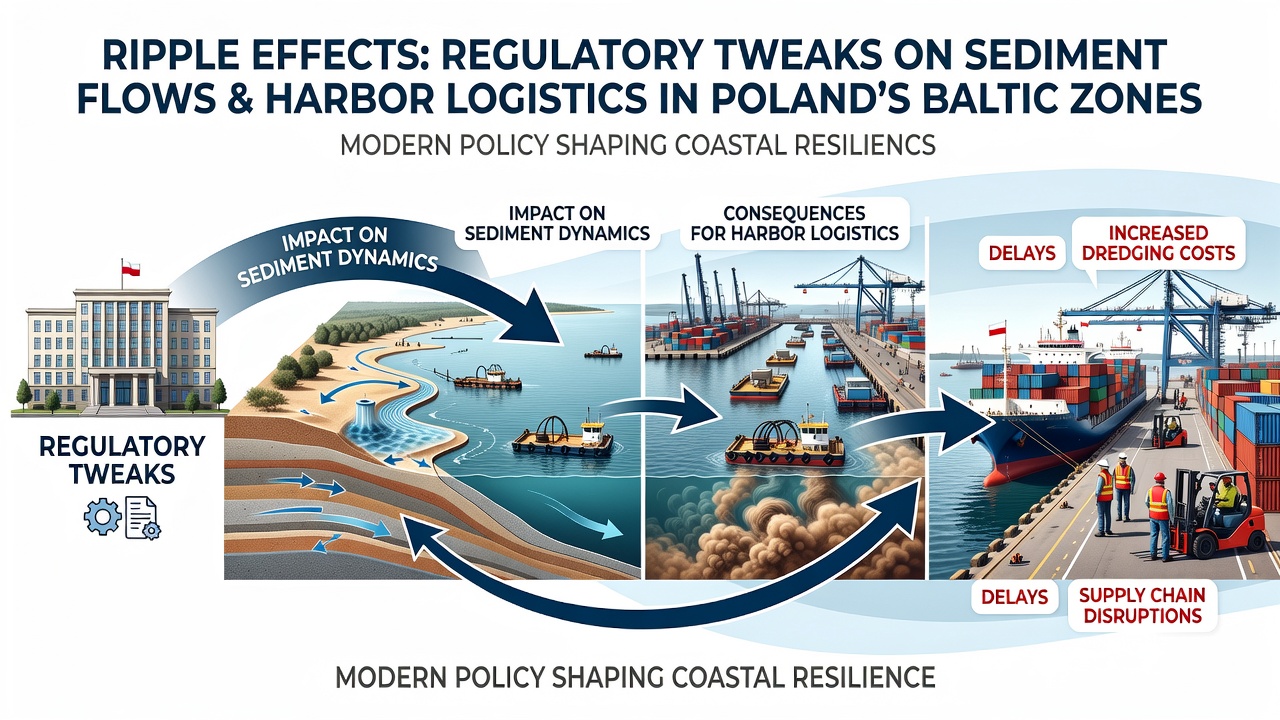
Regulatory adjustments in environmental and maritime policies have begun altering how sediment moves through Poland's Baltic zones, with direct consequences for harbor logistics that handle millions of tons of cargo each year. These changes, many tied to updated EU directives on coastal management, affect dredging schedules, disposal sites, and vessel routing in ports such as Gdańsk, Gdynia, and Szczecin. Observers note that what starts as a tweak in sediment monitoring requirements often cascades into adjustments in shipping timetables and maintenance budgets.
Background on Policy Changes
Poland implemented revised coastal sediment guidelines in 2024 that align with broader Baltic Sea protection frameworks, and these rules gained further traction by October 2026 when new reporting thresholds took effect. The measures require more frequent bathymetric surveys and stricter limits on where dredged material can be relocated. Data from the Polish Maritime Administration shows that average sediment accumulation rates in approach channels have increased slightly in some areas while decreasing in others, largely because disposal zones shifted farther offshore. Researchers tracking these patterns point to HELCOM assessments that link tighter nutrient controls to altered erosion and deposition cycles along the southern Baltic shore.
Harbor operators responded by recalibrating their annual dredging contracts, which now incorporate real-time sediment flow modeling. One facility in the Pomeranian region adjusted its maintenance window from spring to late autumn to avoid peak fish spawning periods mandated under the new rules. This shift created a temporary backlog in bulk carrier arrivals during the transition months, yet logistics planners mitigated delays through staggered vessel scheduling.
Effects on Sediment Flows
Sediment transport models used by coastal engineers indicate that reduced inshore disposal has redirected finer particles toward deeper navigation lanes. In the Vistula Lagoon approaches, measurements collected between 2024 and 2026 reveal a 12 percent rise in silt content within main fairways, prompting additional hydrographic checks. Experts at the Institute of Hydro-Engineering of the Polish Academy of Sciences have documented how these movements influence wave refraction patterns, which in turn affect how quickly channels refill after storms.
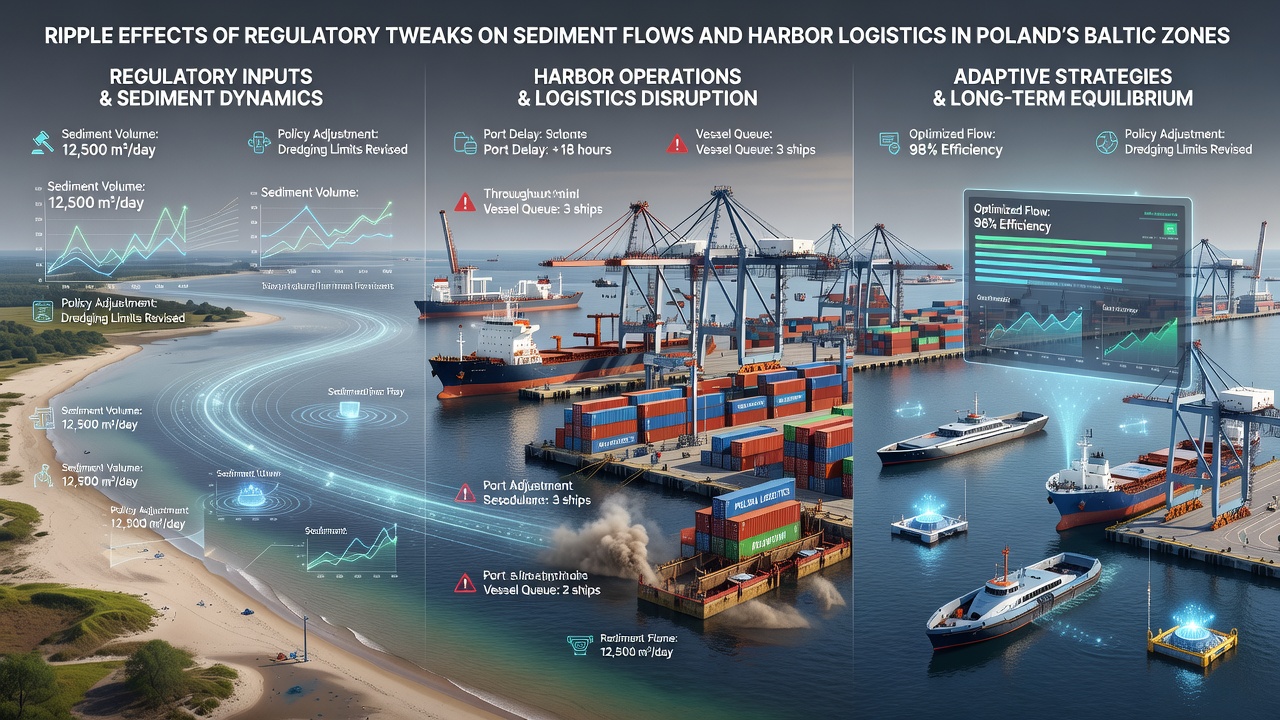
Ports that once relied on nearby dumping grounds now transport material 15 to 25 kilometers offshore, raising fuel consumption for support vessels. The European Environment Agency notes that such extended hauls can increase overall project emissions by up to 18 percent unless newer, low-emission dredgers enter service. Several operators have begun testing electric-assisted equipment on a pilot basis to offset these added distances.
Impacts on Harbor Logistics
Logistics chains dependent on consistent channel depths face new variables. Container terminals in Gdynia reported a need for additional tug assistance during periods of higher siltation, which extended turnaround times by an average of 45 minutes per vessel in early 2026. Bulk terminals handling coal and grain adjusted their loading sequences to accommodate draft restrictions that fluctuate with sediment movement rather than remaining static.
Supply chain managers have integrated sediment forecast data into their planning software, allowing them to reroute certain cargoes to less affected berths when models predict rapid shoaling. This approach reduced idle time for feeder ships but required coordination across multiple stakeholders, including rail operators feeding the ports. According to figures released by the Port of Gdańsk Authority, overall throughput remained stable through the first three quarters of 2026 despite these operational tweaks.
Case Examples from the Region
Take the Szczecin-Świnoujście waterway, where regulators introduced seasonal restrictions on maintenance dredging near protected habitats. The change forced contractors to complete major works during narrower weather windows, which compressed schedules and increased overtime costs. Yet port records show that cargo volumes for LNG and general cargo grew modestly because the authority invested in predictive siltation mapping that kept the main channel open longer than expected.
Another instance involves smaller fishing harbors along the central coast. Tighter rules on sediment relocation limited local disposal options, leading some communities to pool resources for shared offshore transport contracts. Those arrangements lowered individual expenses while maintaining access for vessels under 500 gross tons.
Looking Ahead
Further refinements scheduled for 2027 may introduce automated sediment sensors linked directly to vessel traffic systems. Such integration could allow real-time draft adjustments communicated to incoming ships, reducing the need for last-minute anchorage waits. Industry reports suggest that ports adopting these tools early have already seen modest gains in berth utilization rates.
Conclusion
The interplay between regulatory updates and physical sediment processes continues to shape logistics planning in Poland's Baltic harbors. Ports that combine updated modeling with flexible scheduling demonstrate how operational continuity can persist even as disposal practices evolve. Data gathered through 2026 indicates that proactive adaptation remains the primary mechanism for maintaining both navigational safety and commercial throughput under the current framework.