Hugo Sullivan · 13 September 2026
Safety Protocol Evolutions for Dock Workers in the Baltic Region's Storm Seasons
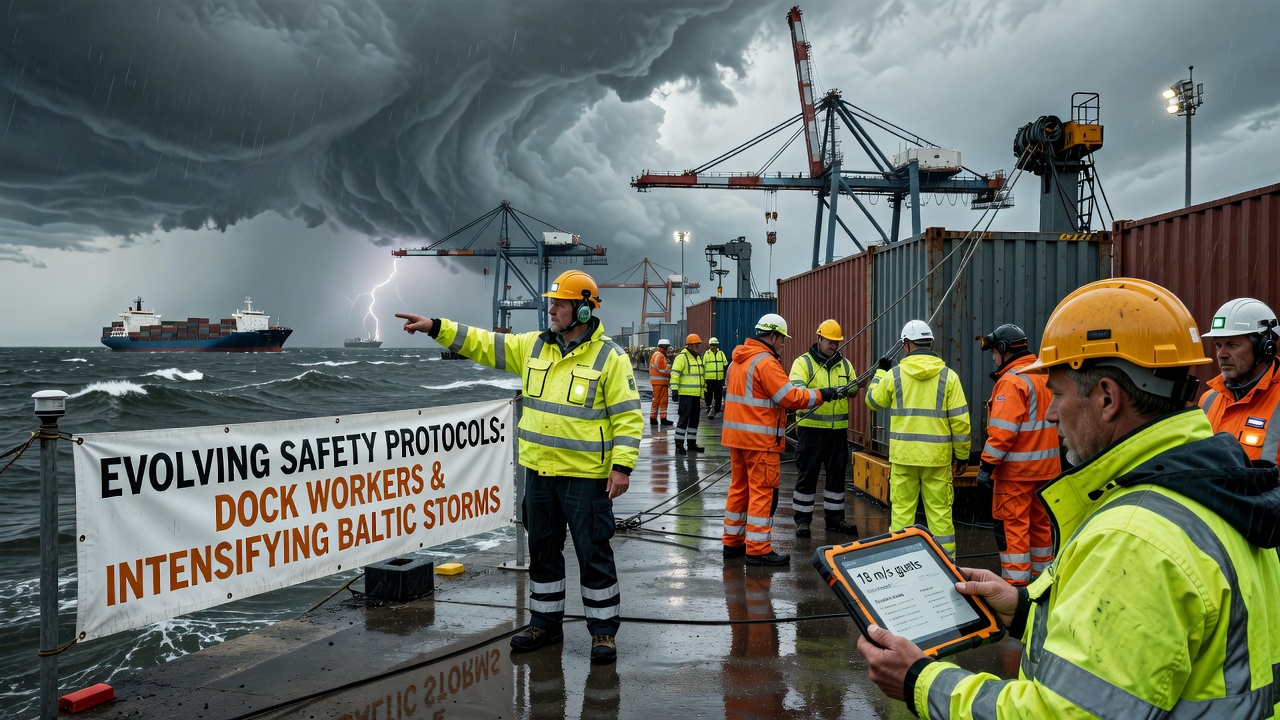
Baltic ports have recorded measurable increases in storm frequency and wind speeds over the past decade, with data from regional meteorological networks indicating that autumn and winter events now bring higher wave heights and prolonged gale-force conditions compared to earlier records. Dock workers face extended exposure during loading operations, vessel mooring, and cargo handling, which has prompted port authorities across Poland, Germany, Sweden, and the Baltic states to revise safety frameworks. These updates incorporate real-time monitoring systems, revised work-rest schedules, and enhanced personal protective equipment standards that align with European Union maritime guidelines.
Storm Pattern Shifts Documented Through 2026
Measurements compiled through September 2026 show that Baltic Sea storm seasons now extend later into the year, with average peak wind speeds rising by several knots in key basins according to analyses from the European Maritime Safety Agency. Ports such as Gdańsk, Riga, and Klaipėda report more frequent operational halts lasting beyond 48 hours, while shorter but intense squalls disrupt schedules with less warning time than before. Researchers at institutions in Finland and Estonia have correlated these changes with broader atmospheric patterns, noting that warmer sea surface temperatures contribute to faster storm development over the water.
Port operators have responded by integrating satellite feeds and buoy networks that feed directly into local control centers, allowing supervisors to issue evacuation orders for exposed piers before conditions reach critical thresholds. These systems replace older manual observation methods and reduce the window during which personnel remain on open quays.
Revised Training and Equipment Standards
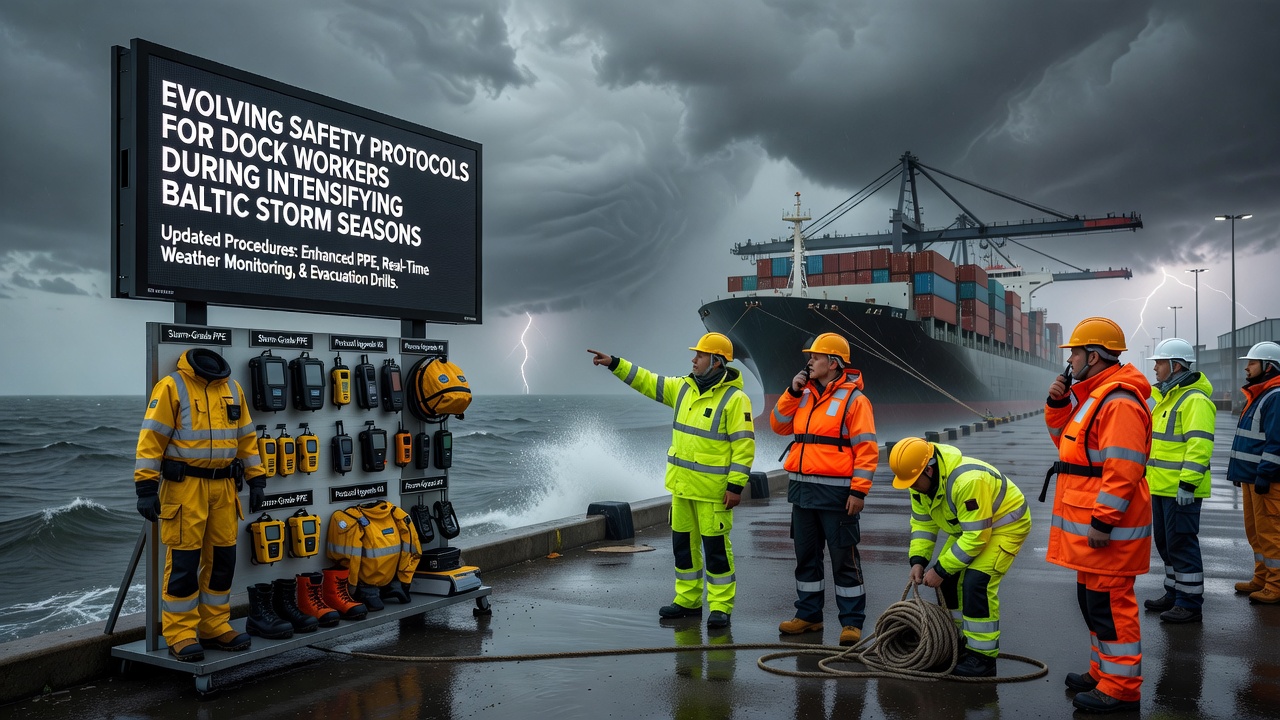
Updated certification programs now require dock workers to complete scenario-based drills that simulate sudden wind shifts and wave overtopping, with sessions conducted in partnership with national maritime academies. Workers practice tethering procedures using reinforced harness systems rated for higher wind loads, and companies supply layered thermal gear designed to maintain mobility while resisting water penetration during spray events. Annual refresher courses incorporate data from actual incidents logged in 2024 and 2025, focusing on decision points where teams chose to continue versus suspend operations.
Many facilities have introduced wearable sensors that track worker location and vital signs, transmitting alerts to on-site medical teams when individuals remain stationary for extended periods in exposed zones. These devices integrate with existing radio networks and help supervisors maintain accountability during high-wind shifts without relying solely on visual line-of-sight checks.
Operational Adjustments Across Major Ports
Terminal managers in multiple countries now enforce tiered response levels tied to forecasted wave heights and sustained wind speeds, with level-three alerts triggering complete withdrawal from outer berths and activation of sheltered assembly points. Cargo handling plans incorporate buffer periods that account for potential delays, and vessel turnaround schedules include contingency clauses for storm-related postponements. In Sweden and Denmark, some operators have piloted automated mooring systems that reduce the number of personnel required on deck during final securing phases.
Collaboration between neighboring ports has increased, with shared databases allowing rapid dissemination of best practices after each significant weather event. Observers note that joint exercises held in 2025 demonstrated faster response times when crews from different facilities trained together on standardized communication protocols.
Regulatory Framework Developments
National labor inspectorates have aligned inspection checklists with updated risk assessments that factor in longer storm seasons, requiring employers to document how they adjust shift patterns during peak months. The International Maritime Organization has issued supplementary guidance on port facility security plans that now address weather-related personnel safety, encouraging adoption of digital logging systems for near-miss reporting. Ports that implemented these measures ahead of the 2026 season reported fewer recordable incidents during the first autumn storms compared to prior years.
Insurance providers have begun offering premium adjustments for facilities that maintain continuous weather data archives and demonstrate adherence to the revised protocols, creating financial incentives alongside regulatory requirements. These changes reflect broader efforts to maintain port throughput while protecting the workforce that keeps operations running.
Conclusion
Baltic dock operations continue to adapt through layered monitoring, refined training, and coordinated regulatory updates that address documented increases in storm activity. Facilities that combine sensor technology with established safety cultures show measurable reductions in exposure hours during adverse conditions, while ongoing data collection through 2026 supports further refinements to work procedures. The emphasis remains on verifiable systems that allow rapid, evidence-based decisions rather than reactive measures once storms have already arrived.