Avery Vogel · 27 September 2026
When Tourism Meets Industry: Policy Changes for Coastal Docks in Poland's Evolving Regulatory Landscape
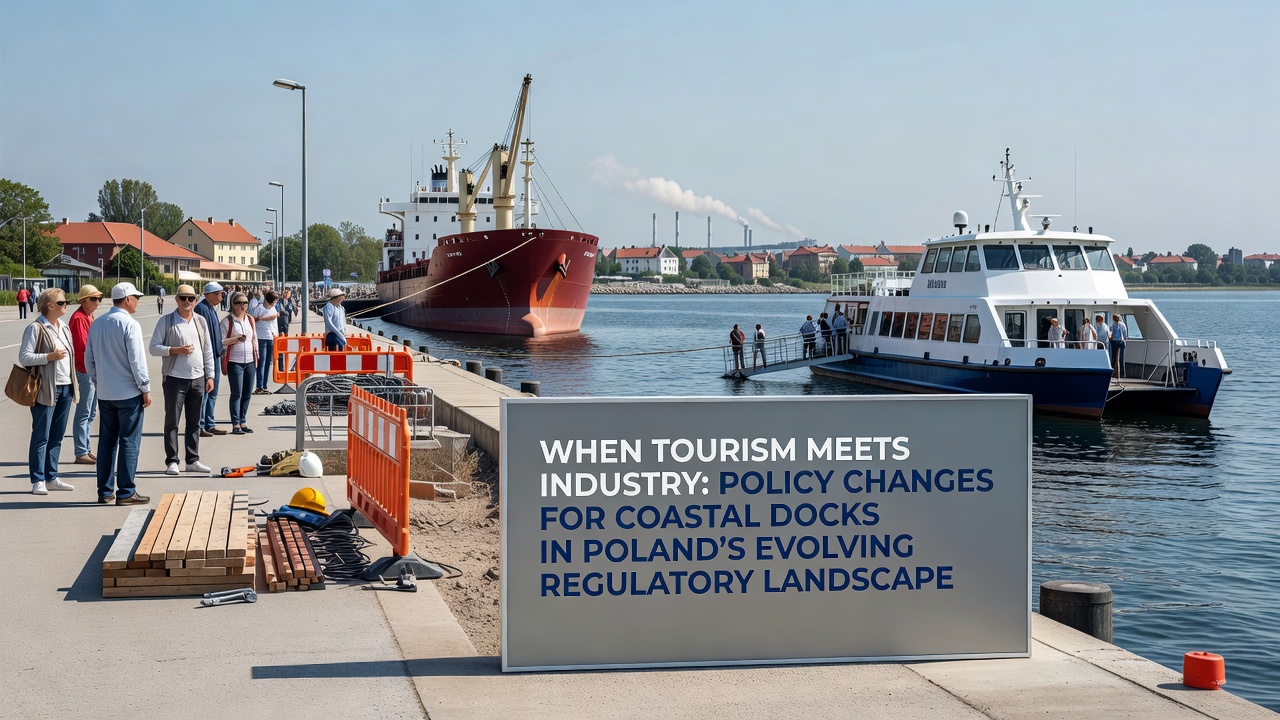
Poland's Baltic coastline has long served as a hub where commercial shipping, ship repair facilities, and emerging leisure tourism overlap, and regulators have responded with layered policy updates that address safety, environmental standards, and access rights for both sectors. Recent amendments to maritime spatial planning laws require dock operators to maintain separate zones for passenger vessels and cargo handling, while integrated permitting processes now evaluate cumulative impacts from increased ferry traffic and industrial throughput. Data compiled by the Polish Ministry of Infrastructure shows a 27 percent rise in tourist vessel calls at ports such as Gdynia and Szczecin between 2022 and 2025, prompting authorities to revise berth allocation rules and noise emission thresholds.
Regulatory Framework Updates
Observers note that the 2024 Maritime and Coastal Code revisions introduced mandatory environmental impact assessments for any dock expansion project exceeding 500 meters of new quay length, and these assessments must incorporate tourism revenue projections alongside cargo volume forecasts. The changes align with broader European Union directives on maritime spatial planning, yet they also incorporate national requirements for winter storm resilience that reflect Baltic-specific meteorological records. In September 2026, updated certification standards for dockside fueling stations will take effect, requiring double-walled piping systems and real-time spill detection sensors at all facilities handling both commercial fuel barges and recreational craft.
Researchers at the Maritime Institute in Gdańsk documented how overlapping usage patterns create bottlenecks during peak summer months, and their findings fed directly into new scheduling protocols that prioritize passenger disembarkation windows between 0600 and 0900 while reserving afternoon slots for container operations. These protocols rely on digital booking platforms that dock authorities must maintain under the revised administrative guidelines.
Balancing Stakeholder Interests
Industry associations representing shipbuilders and freight forwarders have participated in public consultations that shaped the latest round of amendments, and records from those sessions indicate emphasis on maintaining competitive turnaround times for vessels. At the same time, municipal tourism boards supplied data on visitor spending patterns that justified investments in pedestrian promenades and shaded waiting areas adjacent to working docks. The resulting policy language requires operators to allocate at least 15 percent of any new dock surface area to public access corridors, while preserving security perimeters around industrial equipment.
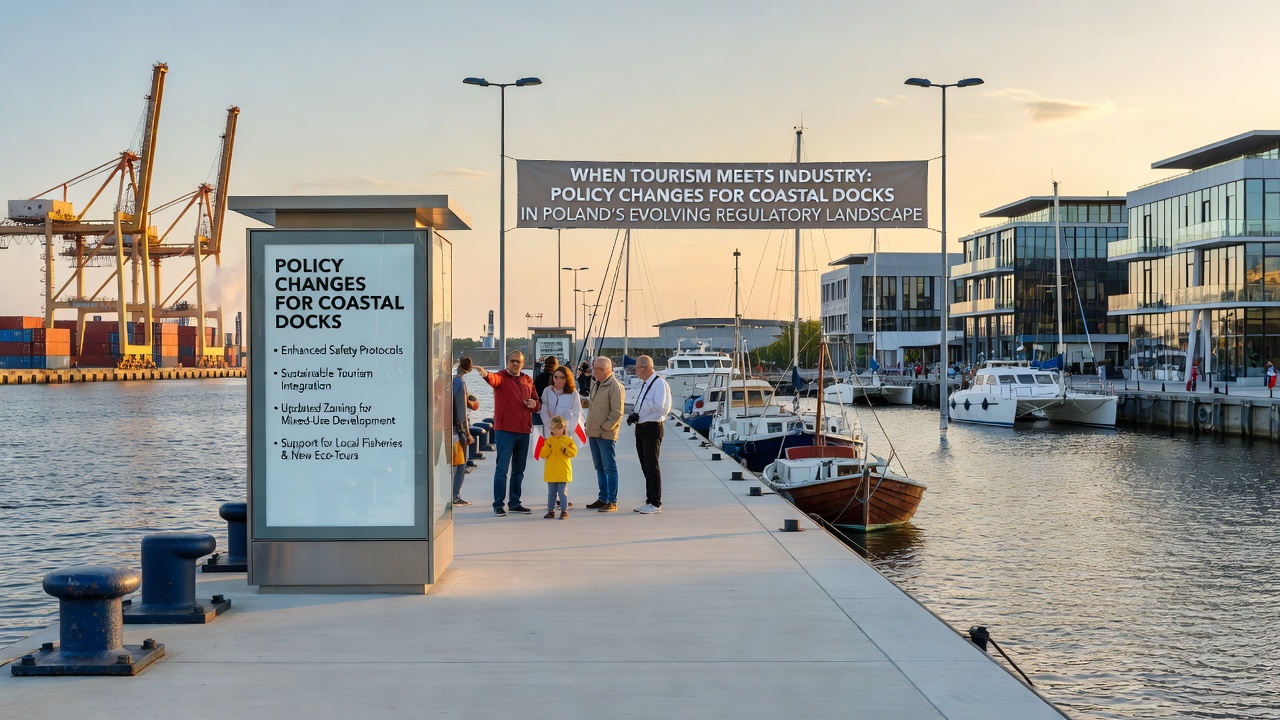
One study conducted by a consortium of Baltic universities examined comparable mixed-use facilities in the Netherlands and Canada, and it revealed that coordinated zoning reduced conflict incidents by 41 percent over a three-year monitoring period. Polish authorities incorporated similar metrics into enforcement mechanisms, including quarterly joint inspections by maritime safety officers and local environmental agencies. Figures released by the European Commission show that Poland's share of EU-funded coastal infrastructure projects reached 8.3 percent in the 2021-2027 programming cycle, with a portion earmarked for dual-purpose upgrades that accommodate both tourism growth and industrial capacity.
Implementation Timeline and Compliance
Port authorities in Świnoujście began pilot testing of the new digital scheduling system in early 2025, and preliminary results indicate improved throughput without compromising safety margins. Compliance deadlines for smaller municipal docks have been staggered through 2027, allowing phased installation of monitoring equipment and staff training programs. Training curricula now include modules on tourism passenger flow management alongside traditional cargo handling procedures, reflecting the blended operational reality at many facilities.
External audits scheduled for 2026 will assess adherence to the revised noise and water quality standards, and non-compliant operators face graduated penalties that escalate from administrative warnings to temporary berth restrictions. The policy documents explicitly reference data from the National Oceanic and Atmospheric Administration on acoustic monitoring techniques, adapting those methodologies to Baltic conditions through local research partnerships.
Conclusion
The intersection of tourism expansion and industrial operations along Poland's coast has driven measurable shifts in regulatory design, with updated codes emphasizing integrated planning, shared infrastructure standards, and scheduled compliance checkpoints extending into 2026 and beyond. These measures rest on documented usage trends and cross-regional research rather than isolated directives, creating a framework that multiple stakeholder groups can reference when planning future dock developments. Continued data collection from operational sites will inform subsequent refinements as both sectors evolve.